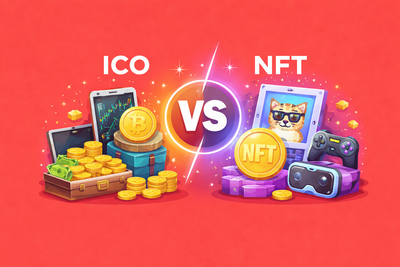
The blockchain ecosystem continues to evolve rapidly, and by 2026, both Initial Coin Offerings (ICOs) and Non-Fungible Tokens (NFTs) will have matured into powerful investment avenues. While ICOs focus on fundraising through fungible tokens, NFTs represent unique digital ownership across art, gaming, and real-world assets.
For investors, the big question remains: where should you put your money in 2026? Understanding the differences, risks, and growth potential of each can help you make a smarter decision.
Overview of ICOs and NFT Projects in 2026
ICOs have regained momentum in 2026 with improved regulatory frameworks and stronger security measures. Startups now use ICOs to raise capital for blockchain-based platforms, DeFi protocols, and Web3 innovations. With the support of a reliable
ICO Development Company, projects are more structured, transparent, and investor-friendly than in earlier years.
NFTs, on the other hand, have expanded far beyond digital art. They now power industries like gaming, music rights, real estate tokenization, and identity verification. The NFT market has matured into a utility-driven ecosystem, making it more sustainable than its early speculative phase.
Both ICO Development Solutions and NFT platforms are benefiting from advancements in blockchain scalability and interoperability, making them more accessible to global investors.
Key Differences Between ICO and NFT Investment Models
The fundamental difference between ICOs and NFTs lies in ownership and utility.
ICOs offer fungible tokens, meaning each token has the same value and can be exchanged easily. These tokens often represent a stake in a project, access to services, or governance rights. Investors typically buy tokens early at lower prices, expecting value appreciation as the project grows.
NFTs are non-fungible, meaning each asset is unique. Ownership is tied to specific digital or physical items, such as artwork, collectibles, or virtual land. The value of NFTs depends on rarity, demand, and utility rather than standard market pricing.
An experienced team offering ICO Development Services can help businesses design tokenomics that attract investors, while NFT creators focus more on uniqueness and community engagement.
Additionally, ICOs are often backed by structured ICO software development, whereas NFTs rely heavily on marketplace dynamics and creator reputation.
Risk Factors and Market Volatility Comparison
Both ICOs and NFTs carry significant risks, but the nature of those risks differs.
ICOs are often exposed to regulatory uncertainties, project failure, and technical vulnerabilities. Even in 2026, not all projects succeed, and investors must carefully evaluate whitepapers, teams, and use cases. Working with a trusted ICO Development Company reduces risks for project creators, but investors still need due diligence.
NFTs are highly volatile due to market sentiment and trends. Prices can skyrocket based on hype and drop just as quickly when interest fades. Liquidity can also be an issue, as selling an NFT depends on finding the right buyer.
ICO Development Experts emphasize the importance of security audits and compliance to reduce ICO risks. Meanwhile, NFT investors must rely on market timing and community insights.
In both cases, diversification is key to managing risk effectively.
Profit Potential: Short-Term vs Long-Term Gains
When it comes to profitability, ICOs and NFTs offer different opportunities.
ICOs are typically suited for long-term gains. Investors who identify promising projects early can benefit from exponential growth as the platform gains adoption. Tokens may also provide staking rewards or governance benefits, adding to their value over time.
NFTs, however, are often associated with short-term gains, especially in trending markets. Flipping NFTs—buying low and selling high within a short period—remains a popular strategy. That said, long-term NFT investments are also emerging, particularly in gaming and metaverse ecosystems.
Businesses leveraging ICO Development Services are increasingly focusing on sustainable growth models, which can lead to consistent returns for patient investors.
Meanwhile, NFT projects with strong utility and community backing are proving to be valuable long-term assets as well.
Use Cases Driving Growth in ICOs and NFTs
The growth of both ICOs and NFTs in 2026 is driven by real-world applications.
ICOs are fueling innovations in decentralized finance (DeFi), supply chain management, healthcare, and cross-border payments. Startups are using ICO token development to create tokens that power their ecosystems and incentivize user participation.
NFTs are transforming industries such as gaming, entertainment, and real estate. In gaming, NFTs enable true ownership of in-game assets. In real estate, they represent fractional ownership of properties. Even brands are using NFTs for loyalty programs and digital identity.
A professional ICO token development company can help businesses create scalable token ecosystems, while NFT platforms continue to push the boundaries of digital ownership.
Additionally, integrated ICO Development Solutions are enabling projects to combine ICOs and NFTs, creating hybrid models that offer both fungible and non-fungible assets.
How to Choose the Right Investment Based on Your Goals
Choosing between ICOs and NFTs ultimately depends on your investment goals, risk tolerance, and market understanding.
If you are looking for structured investments with long-term growth potential,
ICOs may be the better option. They provide access to early-stage blockchain projects and offer opportunities for significant returns over time. Collaborating with an ICO Development Company ensures that projects are built on strong foundations, increasing investor confidence.
On the other hand, if you prefer dynamic, trend-driven markets with opportunities for quick profits, NFTs might be more suitable. However, this requires active market monitoring and a good understanding of trends.
For businesses entering the space, partnering with an ICO software development company ensures robust platform development and security. Leveraging ICO software development services helps create scalable and reliable systems that attract investors.
It’s also worth noting that many investors are now diversifying across both ICOs and NFTs to balance risk and reward.
Conclusion
In 2026, both ICOs and NFT projects present exciting investment opportunities, each with its own strengths and challenges. ICOs offer structured growth, long-term value, and utility-driven ecosystems, while NFTs provide unique ownership, creativity, and short-term profit potential.
The decision ultimately comes down to your investment strategy. If you value stability and long-term returns, ICOs are a strong choice. If you thrive in fast-paced markets and enjoy speculative opportunities, NFTs may be more appealing.
By leveraging expert ICO software development and working with experienced teams, businesses can build secure and scalable projects that attract investors. Whether it’s ICO Development Services or innovative NFT platforms, success in 2026 will depend on careful planning, informed decision-making, and a clear understanding of the market.
In a rapidly evolving digital economy, the smartest investors are those who stay informed, diversify their portfolios, and adapt to emerging trends.