Categories
- All Categories
- Personal
- Entertainment
- Technology
- Recreation
- Business
- Other
- Society
- Shopping
- Family & Home
Tags
-
#writing
#slotonline
#wellness
#anime
#Mindfulness
#seo
#Shopping
#Construction
#realestate
#homebuying
#Attorney
#Lawfirm
#acrepair
#acservice
#hvacrepair
#hvacservice
#hvacbaldwin
#acfix
#injuryattorney
#accidentlawyer
#legalhelp
#injurylawfirm
#accidentclaims
#animeonline
#animefans
#animeseries
#injurylawyer
#personalinjury
#insuranceclaims
#Law
#lawyer
#caraccident
#injurylaw
#keithlawgroup
#accidentclaim
#digitalmarketing
#mankatolawyer
#personalinjurylawyer
#accidentattorney
#injuryclaim
#caraccidentlawyer
#localattorney
#airconditioningrepair
#homecomfort
#airconditioning
#acmaintenance
#heatingandcooling
#carcrashlaw
#vehicleaccident
#slotssites
#bestonlineslots
#slotsguide
#trustedsites
#onlinegaming
#slotsreviews
#bestslotsites
#choosingslotssites
#slotsbonuses
#slotreviews
#coding
#programming
#webdevelopment
#softwaredevelopment
#frontend
#backend
#fullstack
#learncoding
#techcourses
#developmentskills
#jimcarreyhome
#celebrityhome
#flooring
#woodfloors
#homeinspo
#homedecoration
#interiorstyle
#modernhome
#cozyhome
#luxuryflooring
#criminallawyer
#stpaulattorney
#defenseattorney
#criminaldefense
#stpaullaw
#lawoffice
#stpaullawyer
#criminalcase
#defenselaw
#workplaceaccident
#workplaceinjuryhelp
#workersbenefits
#employeeinjury
#legalservices
#injuryatwork
#workerssupport
#legalassistance
#criminallaw
#portlandmaine
#mainecrime
#attorneyatlaw
#criminaljustice
#lawhelp
#legalrights
#BocaRaton
#accident
#injury
#claim
#legal
#Florida
#localconstruction
#mankatoconstruction
#homebuilding
#commercialconstruction
#residentialconstruction
#buildingprojects
#localbuilders
#contractor
#building
#mankato
#BaldwinAC
#ACRepairBaldwin
#homeCooling
#ACServiceBaldwin
#airConditioningBaldwin
#ACCheck
#ACHelp
#floorwaxing
#floormaintenance
#commercialcleaning
#businessfloors
#hardfloors
#vinylfloors
#linoleumfloors
#facilitycare
#professionalcleaning
#floorsafety
#ssdilawyers
#minneapolisssdi
#ssdiattorneys
#disabilitylaw
#minnesotalawyers
#ssdihelp
#ssdi
#disabilityclaims
#minneapolislawyers
#fireprotection
#firesafety
#fireequipment
#fireextinguishers
#sprinklers
#smokedetectors
#alarms
#emergencyexits
#safetyequipment
#fireprevention
#officecleaning
#cleaningservices
#facilitymaintenance
#janitorialservices
#buildingcleaning
#workspacecleaning
#cleaningcompany
#stpaulcleaning
#airconditioner
#summercomfort
#quadbiking
#marrakechadventures
#agafaydesert
#marrakechtours
#atvexperiences
#moroccotravel
#desertactivities
#quadbikeexploration
#marrakechoutdoors
#deserttour
#onlinebazár
#bazár
#onlinepredaj
#onlinenákup
#predámkúpim
#inzercia
#inzerciaonline
#secondhand
#použitéveci
#predajvecí
#slotindonesia
#slotgacoron
#slotterpercaya
#slotdigital
#slotmodern
#slotsantai
#slotfavorit
#slotterkini
#slotama
#slotpopuler
#Beauty
#Skincare
#Resume
#Jobs
#Careers
#Employment
#Work
#Applications
#Recruitment
#Hiring
#Professionals
#onestepwin
#platformonline
#situsgame
#akunonline
#aksessitus
#onestepwindaftar
#onestepwinlogin
#daftarakun
#loginakun
#marketingcourse
#marketingtraining
#marketingclasses
#marketingacademy
#marketinginstitute
#aimarketing
#onlinemarketing
#socialmedia
#SEOtools
#onlinetools
#developertools
#webtools
#freeSEO
#codingtools
#APItools
#JSONtools
#Base64tools
#anoboy
#animestreaming
#nontonanime
#animeindonesia
#animesubindo
#streaminganime
#downloadanime
#animeterbaru
#VentureCapital
#VC
#Talent
#Team
#Investors
#Candidates
#Startups
#UberAccidentLawyer
#RideshareAccident
#RideshareInjury
#floorcare
#commercialflooring
#buildingmaintenance
#floorprotection
#minnesotafloors
#winterfloorcare
#floorpolishing
#longtermmaintenance
#russellvillecaraccidentlawyer
#caraccidents
#personalinjurylaw
#trafficaccidents
#vehicledamage
#injuryhelp
#fauxbillets
#fauxbilletsàvendre
#achetefauxbillets
#argentfactice
#propmoney
#monnaiefactice
#billetspourprojets
#visuelargent
#billetsnonréels
#créationartistique
#kredit
#kreditpul
#pul
#tezkredit
#banksizkredit
#mikrokredit
#qisakredit
#borcpul
#onlaynkredit
#azpulmatkredit
#commercialfloors
#happiness
#joy
#wellbeing
#mentalhealth
#positivevibes
#innerpeace
#selfgrowth
#personaldevelopment
#emotionalwellness
#mulia173
#mulia173slot
#onlineslot
#casinoslot
#slotgame
#slotgameplay
#slotexperience
#casualgaming
#simpleslot
#brokenbone
#fracture
#accidentlaw
#medicalclaim
#강남nightlife
#선릉nightlife
#강남유흥
#선릉유흥
#강남도파민
#강남하이퍼블릭
#선릉하이퍼블릭
#강남유흥문화
#선릉유흥문화
#watchinganime
#animedonghua
#asiananimation
#animeculture
#gifts
#foodsupplements
#retinol
#retinolcream
#facecream
#antiwrinklecream
#homeinspection
#homeinspector
#propertyinspection
#homeselling
#newconstruction
#prelistinginspection
#homeownership
#houseinspection
#vehiclecollision
#crashclaim
#autoaccident
#divorce
#familylaw
#Minnetonka
#childcustody
#childsupport
#spousalmaintenance
#Minnesotaattorney
#familyattorney
#co-parenting
#firealarms
#firesuppression
#homesafet
#firefighting
#smokealarms
#Mankatoinjurylawfirm
#caraccidentlawyerMankato
#Minnesotainjurylawyer
#Mankatoaccidentattorney
#injuryclaimMinnesota
#localinjurylawyers
#accidentlawfirmMankato
#FarrishJohnsonLawOffice
#Mankatolawoffice
#personalinjuryclaimhelp
#StPaulCriminalLawyer
#StPaulCriminalDefense
#CriminalDefenseAttorneyMN
#StPaulDefenseLawyer
#MinnesotaCriminalLawyer
#RamseyCountyAttorney
#DWILawyerStPaul
#DrugCrimeLawyerMN
#AssaultDefenseStPaul
#TheftLawyerMN
#WorkInjuryLawyer
#WorkersCompLawyer
#MNWorkersComp
#WorkAccidentLaw
#InjuryAttorneyMN
#WorkersCompClaim
#WorkInjuryHelp
#MNLawFirm
#PortlandLaw
#DefenseLawyer
#CriminalAttorney
#PortlandME
#MELawyer
#MECourt
#bocaratonlawyer
#bocaratonpersonalinjurylawyer
#slipandfall
#floridalawyer
#insuranceagent
#andovermninsurance
#homeinsurance
#autoinsurance
#lifeinsurance
#insurancecoverage
#insurancequotes
#localinsuranceagent
#insuranceplanning
#policyreview
#ssdilawyer
#ssdidenial
#ssdappeal
#disabilitybenefits
#minnesotalawyer
#ssdiattorney
#ssdibenefits
#ACRepairHudson
#AirConditioningHudson
#HVACHudson
#ACServiceHudson
#BoldtsPlumbing
Archives
My first year investing in professional search marketing
-
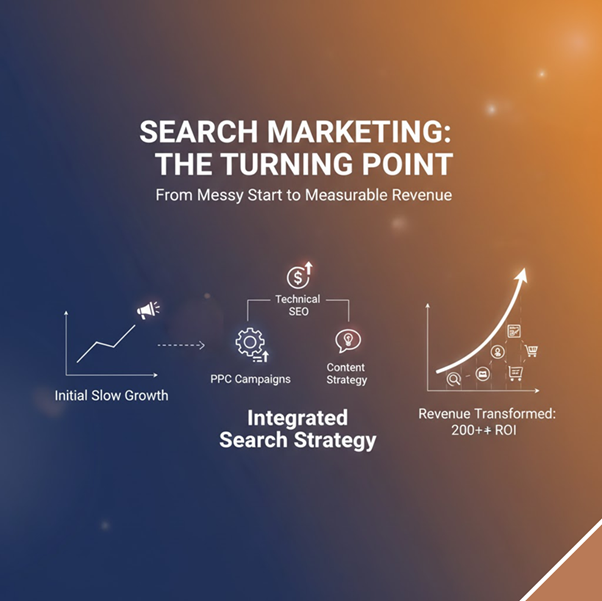
Investing in professional search marketing completely changed how revenue flows through the business, but not in the straight‑line way imagined at the start. The first year felt messy, expensive, and uncertain for months before the numbers finally told a different story.Why search marketing became a priority
The business had been growing slowly through word of mouth, referrals, and a few repeat customers, but revenue hit a plateau that traditional channels could not push past. There were only so many networking events that could be attended and only so many calls that could be made in a week. At the same time, more buyers were clearly starting their journey online, with a huge majority of online experiences beginning on search engines rather than on social platforms or directories. That shift made the lack of serious search visibility feel like a structural weakness, not just a minor gap.
Two things pushed the decision over the line:
● Competitors with weaker products were outranking this business and winning projects purely because they were visible when people searched.
● The cost of not showing up in search began to look higher than the risk of spending on professional marketing.
With that mindset, the business committed to a structured search strategy instead of isolated experiments.
Choosing an agency and early mistakes
Like many small owners, there was limited time to become an expert in every nuance of SEO and paid search, so hiring outside help felt logical. The first choice, however, turned into an expensive lesson. The pitch was heavy on promises and light on specifics: “fast rankings,” “secret methods,” and vague dashboards that looked impressive but did not tie to actual revenue. Reporting focused on vanity metrics such as impressions and low‑intent traffic from unrelated keywords, with very little attention to qualified leads.
In hindsight, too little weight was given to:
● Industry‑specific experience and case studies showing revenue outcomes, not just traffic.
● Transparent explanations of tactics and realistic timelines instead of quick‑win guarantees.
Looking back, there is a quiet frustration: a wish that someone had clearly explained what to look for in an organic search engine optimization seo company before money was wasted on a partner that looked good on paper but never really fit. That misstep consumed a few precious months and a noticeable chunk of the annual marketing budget.
Resetting the strategy: SEO, PPC, and content
Midway through the year, the relationship with the first provider ended and the business reset the approach with a leaner, more focused plan. This time, the objectives were written in revenue language, not marketing jargon: more qualified leads, lower acquisition cost, and measurable ROI over twelve months. The new partner pushed for a combined strategy, aligning organic SEO with targeted pay‑per‑click (PPC) campaigns.
The core pieces of the reset included:
● Technical foundation
The website was cleaned up to load faster, fix broken links, improve mobile usability, and structure pages so search engines could understand them more clearly. This alone improved baseline visibility and reduced drop‑offs from visitors who previously abandoned slow pages.● Intent‑driven keyword strategy
Instead of chasing broad, competitive terms, the focus shifted to high‑intent phrases that reflected buying mode rather than casual research. This mirrored what successful small‑business case studies have shown: fewer visitors, but better‑qualified ones, often outperform raw traffic growth.● PPC for immediate momentum
PPC ads were used to start generating leads quickly while organic search improvements slowly took hold. This dual approach is often recommended for small businesses with limited time to prove ROI, because PPC provides quick visibility while SEO builds long‑term compounding returns.● Content with a job to do
Blog posts, landing pages, and FAQs were created to answer specific questions buyers actually typed into search engines, rather than vague thought‑leadership content. Successful small‑business campaigns frequently emphasize this kind of problem‑solving content to convert visitors into leads.That mix turned search marketing from a set of disjointed tactics into a coherent revenue program.
What actually happened to revenue
The financial story over the twelve months did not follow a straight upward line; it looked more like a step function. For roughly the first three to four months, spend outpaced visible return, which matches what many Indian and global small‑business case studies show when they commit to SEO and PPC together. Sales barely moved, and it was easy to second‑guess the decision.
Then the numbers began to shift:
● As organic rankings climbed for carefully chosen high‑intent keywords, monthly organic traffic to key service pages grew sharply, similar to case studies where small businesses doubled or more their organic visits with targeted SEO.
● Lead quality improved as content and ads filtered out casual visitors and attracted people looking specifically for the niche services offered.
● The customer acquisition cost started dropping because more of the leads generated from organic channels were closing without additional ad spend, a pattern common in long‑term SEO‑led growth stories.
By the end of the first year, revenue told a clear story:
● A meaningful percentage of total new business came directly from search—both organic and paid—where previously it had been negligible.
● Overall lead volume more than doubled, but more importantly, the proportion of qualified leads increased, which is exactly what effective search strategies for small businesses are designed to achieve.
● The blended return on investment across SEO and PPC turned positive, with gains comparable to documented cases where small companies achieved well over 200 percent ROI from well‑structured search campaigns.
Instead of relying on a handful of repeat customers and referrals, revenue was now supported by a predictable pipeline of leads originating from search.
Lessons learned as a small owner
From a small business owner’s perspective, the first year of investing in professional search marketing reshaped how growth is viewed. Not every decision was perfect, but several lessons now feel non‑negotiable:
● Search is not optional anymore
With the majority of online journeys starting from search, treating SEO and PPC as “nice to have” puts a ceiling on growth that no amount of offline hustle can easily break. For a small operation, that visibility gap directly translates into lost revenue.● The right partner matters more than perfect knowledge
The early mistake with the first provider underlined how critical it is to check for transparency, realistic expectations, and aligned incentives when choosing an SEO or search marketing agency. An agency that talks about pipeline, customers, and margins fits better than one that only talks about rankings and clicks.● Patience and measurement beat impulse
Nearly every credible search marketing case study for small businesses emphasizes timeframes of several months, not weeks, to see meaningful organic results. Tracking metrics like qualified leads, acquisition cost, and lifetime value—rather than just traffic—helps resist the urge to cut investment just before the compounding benefits begin.● Integrated strategy outperforms isolated tactics
Combining organic SEO with PPC and structured content allowed each channel to reinforce the others, mirroring what successful campaigns consistently report. PPC captured demand immediately, while SEO quietly built an engine that now delivers leads even on days when no ads run.A year in, the decision to invest in professional search marketing looks less like a risky bet and more like a delayed‑gratification investment that fundamentally shifted how revenue arrives. The business now owns an asset in the form of online visibility and search authority, and that asset continues to work every day, whether anyone is actively making calls or not.


