Categories
Tags
-
#fleet insurance
#RFP in Healthcare
#Retail Store Installation
#filler for wrinkles around the mouth
#A-frames
#Healthcare SEO
#Poland tour from Wieliczka
#employee handbook translation services
#Honeycomb Paper Bubble Wrap
#Business Law Attorneys
#Animal symbolism
#PDA in a Relationship
#Facial Lymphatic Drainage Massage
#Cloud video surveillance
#Tax deed
#Cloud ERP Solutions
Archives
Cloud Video Surveillance for Scalable Security
-

Summary: Cloud video surveillance transforms how organizations protect people, property, and operations. Businesses improve security and achieve system scalability and remote activity monitoring by transferring their video storage and management to cloud solutions. Cloud-based surveillance systems provide continuous video access with automatic data protection and advanced analytical capabilities, which surpass traditional CCTV systems that rely on local equipment and human data retrieval processes. The modern security requirements of businesses, which focus on safety and operational efficiency, receive complete support from cloud video surveillance systems, which offer both straightforward operation and powerful security capabilities.
Security systems today use advanced technologies which integrate multiple components to deliver enhanced protection compared to traditional methods that depended solely on cameras and recording equipment. Cloud video surveillance uses internet technology to enable off-site storage and management, and analysis of video footage, which delivers capabilities that exceed the limits of conventional systems. Organizations now prioritize cloud adoption because they want security solutions which offer them flexible and dependable protection that relies on data.
Modern businesses in our interconnected world need systems that can do more than capture video because they need to enable remote access, fast security responses, and work together with other security systems. Cloud video surveillance system fulfills these requirements through its secure storage system, which enables real-time viewing and its capacity to expand without being restricted by physical storage devices. The system serves as a suitable solution for businesses that operate on different scales and in various business sectors.
What Cloud Video Surveillance Is
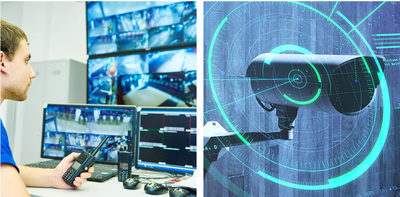
The security system of cloud video surveillance uses cameras to record video, which gets transmitted through the internet to cloud servers instead of being saved on local DVRs or NVRs. This cloud-based system enhances the system's ability to provide accessible services and maintain operational functions while building system resilience. Users can securely access footage from any device that connects to the system, while the system allows for easy integration of advanced features, which include analytics and automatic notification systems.
Enhanced Security Through Cloud Architecture
The primary advantage that cloud video surveillance provides to users delivers them increased protection. The cloud storage system protects security footage through off-site storage in secure data centers, which prevents unauthorized access to the footage. The system safeguards essential security information from threats which could occur through equipment breakdown at the location.
The cloud systems offshore provide users with encrypted transmission and storage solutions, which reduce their risk of unauthorized system access. Organizations can manage footage access through user permissions and multifactor authentication, which enables them to determine who can view the footage and what they can do with it. The system protects sensitive information, which must meet regulatory requirements and data security standards in controlled environments.
The advanced analytics present in cloud video surveillance systems enable better threat detection capabilities. The system uses motion detection together with object recognition and behavior analysis to provide real-time alerts about suspicious activities, which enhance response efficiency and operational awareness.
Scalability Without Hardware Constraints
The conventional CCTV systems require users to purchase multiple hardware components, which require installation. Users need to install extra servers, hard drives, and infrastructure upgrades when they want to add more cameras or need additional storage capacity. The physical limitations of video surveillance systems no longer exist in cloud-based video surveillance systems.
Organizations using cloud systems can increase their security coverage by adding new licenses and devices through the management platform. The system functions without requiring any physical servers or storage equipment. The system allows users to build coverage throughout their entire network of locations, which includes multiple facilities and different campuses.
Cloud scalability enables users to choose between different storage options. Businesses can retain video footage for longer periods without the cost and maintenance of local storage. Organizations can establish central control over their data management processes through retention policies, which enable archiving and deletion operations without needing physical hardware.
Real-Time Remote Monitoring And Control
Remote access to cloud video surveillance systems provides complete operational control to authorized users who can access live and recorded video content from any internet-connected device, including desktops, tablets, and mobile devices. Security teams, facility managers, and executives use this feature to maintain operational awareness from any location without needing physical presence.
Remote monitoring enables faster responses to incidents. Teams can quickly assess situations by receiving alerts and live streams through mobile devices and central dashboards, which enable them to take proper actions. For organizations with distributed locations or mobile workforces, this flexibility improves oversight and coordination.
Improved Collaboration And Incident Response
Cloud platforms enable multiple users to access their resources, which helps teams work together during security investigations and security operations. The system enables secure sharing of footage to law enforcement agencies, risk management personnel, and internal stakeholders without the need for video file manual transfer.
Cloud systems provide integration capabilities with various security solutions that include access control systems, alarm systems, and incident management solutions. The presence of video content within an entire system enables organizations to develop better response procedures that operate more efficiently.
Cost Efficiency And Operational Simplicity
Cloud video surveillance systems decrease total ownership expenses for organizations. The absence of required on-site storage equipment with maintenance contracts and frequent system upgrades enables organizations to decrease both their capital costs and their continuous support expenses. Internal teams dedicate their work to essential tasks because cloud providers handle all infrastructure needs with backup systems and software updates.
Subscription pricing models create fixed expenses, which enable customers to modify their service agreements according to their changing requirements. The system provides businesses with unpredictable security requirements, particularly when their operations experience growth.
Future-Ready Capabilities With Cloud Analytics
Cloud systems undergo continuous evolution as software updates introduce new features. Mid-sized organizations can now access artificial intelligence and machine learning together with advanced video analytics. Organizations can gain operational and security insights through facial recognition, heat mapping, and anomaly detection, which offer more than basic recording capabilities.
Conclusion
Cloud video surveillance provides businesses with a new method for safeguarding their staff members, their physical assets, and their business activities. The system outperforms conventional CCTV systems because it combines better security features with the ability to grow, remote monitoring capabilities, and operational flexibility. Cloud systems enable organizations to handle real-world problems more efficiently because they centralize data storage and make it easier to access information while providing analytical insights.
For businesses seeking secure, scalable video security solutions that integrate with modern workflows and support distributed teams, Resolute Partners offers the expertise to design, implement, and manage cloud-based surveillance that aligns with your security and operational goals.
Your organization needs to conduct a strategic security assessment before adopting advanced cloud video surveillance technology, which replaces its existing outdated CCTV system. The organization needs to hire security experts who possess knowledge of cloud security systems, analytical processes, and system integration methods. Your organization will achieve better security results through a planned transition to cloud-based systems, which will provide your team with immediate operational visibility and control capabilities.
Frequently Asked Questions
Q1. What Is Cloud Video Surveillance?
A1. Cloud video surveillance is a security system that uploads camera footage to secure online servers, enabling remote access, flexible storage, and advanced analytics.
Q2. How Does Cloud Surveillance Improve Security?
A2. Cloud systems protect footage with off-site storage, encryption, and access controls, reducing the risk of loss or unauthorized access compared with local storage systems.
Q3. Can I Access Cloud Video Footage Remotely?
A3. Yes. Authorized users can view live and recorded footage from any device with internet access, including phones and tablets.
Q4. Is Cloud Video Surveillance Scalable?
A4. Yes. Cloud systems eliminate the need for on-site hardware, allowing organizations to add cameras and storage without infrastructure upgrades.
Q5. How Does Cloud Surveillance Support Incident Response?
A5. Cloud platforms provide real-time alerts, multi-user access, and integration with other security systems, enabling faster investigation and response to incidents.


