Categories
Tags
-
#:Business Consultants
#CRM Integration Services
#App Development Services
#iOS App Development
#CRM Consulting & Strategy
#CRM Support & Maintenance
#customer relationship management software
#Blockchain development company in India
#blockchain development solutions
#blockchain software development
#Custom AI development company
#app development company in Gurgaon
#android development companies in Gurgaon
#devops solution provider
Archives
What Are Blockchain Development Solutions? Tools & Real-World E
-
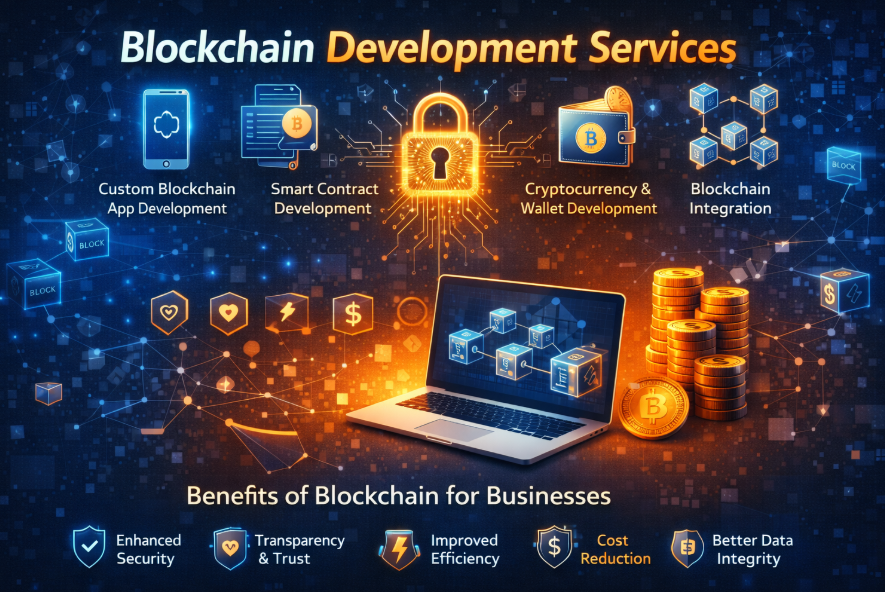
Blockchain development solutions refer to the technologies, platforms, and services used to build decentralized applications, secure digital transactions, and transparent data systems. Unlike traditional databases controlled by a single authority, blockchain systems store information across a distributed network, making data tamper-resistant, transparent, and highly secure. Businesses across finance, healthcare, logistics, and retail are adopting blockchain to improve trust, efficiency, and operational transparency.
At its core, blockchain technology works through a decentralized ledger where transactions are recorded in blocks and linked chronologically. Each block is encrypted and validated by network participants, ensuring that records cannot be altered without consensus. Blockchain development solutions enable organizations to implement this technology to streamline workflows, protect sensitive data, and reduce reliance on intermediaries.
Key Benefits of Blockchain Development Solutions
Blockchain solutions provide multiple advantages that help businesses modernize their operations. Security is one of the most significant benefits, as cryptographic encryption protects data from unauthorized access and fraud. Transparency is another major advantage because all transactions are recorded and visible to authorized participants. This builds trust among stakeholders and reduces disputes.
Additionally, blockchain enhances efficiency by automating processes through smart contracts. These self-executing contracts trigger actions when predefined conditions are met, eliminating manual intervention and reducing errors. Cost reduction is also achieved by removing intermediaries and simplifying verification processes.
Essential Tools Used in Blockchain Development
Developers rely on various tools and platforms to build secure and scalable blockchain systems. Popular blockchain platforms include Ethereum, Hyperledger, and Binance Smart Chain, which provide frameworks for building decentralized applications and smart contracts.
Programming languages such as Solidity, JavaScript, Python, and Go are widely used for blockchain software development. Solidity is particularly popular for writing smart contracts on Ethereum-based networks. Development environments like Remix IDE and Truffle Suite help developers write, test, and deploy smart contracts efficiently.
Other essential tools include blockchain wallets for transaction management, APIs for system integration, and cloud-based blockchain services that simplify deployment and maintenance. These tools enable developers to create reliable blockchain application solutions tailored to business needs.
Real-World Examples of Blockchain Solutions
Blockchain development solutions are transforming industries worldwide. In finance, blockchain enables secure and fast cross-border payments while reducing transaction costs. Cryptocurrencies and digital payment systems rely on blockchain to ensure transparency and fraud prevention.
Supply chain management is another sector benefiting from blockchain technology. Companies use blockchain to track goods from origin to destination, ensuring authenticity and reducing counterfeit products. This transparency improves trust among suppliers, distributors, and customers.
Healthcare organizations use blockchain to securely store patient records and share data among authorized providers while maintaining privacy and compliance. Similarly, the real estate industry uses blockchain for secure property transactions and digital contracts, reducing paperwork and processing time.
Role of Application Solutions in Blockchain Integration
Application solutions play a crucial role in implementing blockchain technology within business environments. Custom applications act as user-friendly interfaces that allow organizations to interact with blockchain systems without technical complexity. These applications integrate blockchain functionality into everyday business operations such as payments, inventory tracking, identity verification, and document management.
By combining blockchain with modern application solutions, businesses can automate workflows, improve data accuracy, and enhance operational efficiency. This integration ensures that blockchain technology delivers practical value rather than remaining a purely technical innovation.
The Future of Blockchain Development
Blockchain adoption continues to grow as businesses recognize its potential to enhance security, transparency, and efficiency. Emerging trends such as decentralized finance (DeFi), tokenization of assets, and blockchain-based identity systems are reshaping digital ecosystems. As technology evolves, blockchain development solutions will become more scalable, energy-efficient, and easier to integrate with existing systems.
Conclusion
Blockchain development solutions are revolutionizing how organizations manage data, transactions, and trust in the digital age. By using powerful tools and platforms, businesses can build secure decentralized systems that improve transparency and efficiency. When combined with modern application solutions, blockchain technology enables seamless integration into real-world operations, helping businesses innovate, reduce costs, and stay competitive in an increasingly digital world.


May 5- -
-
Report