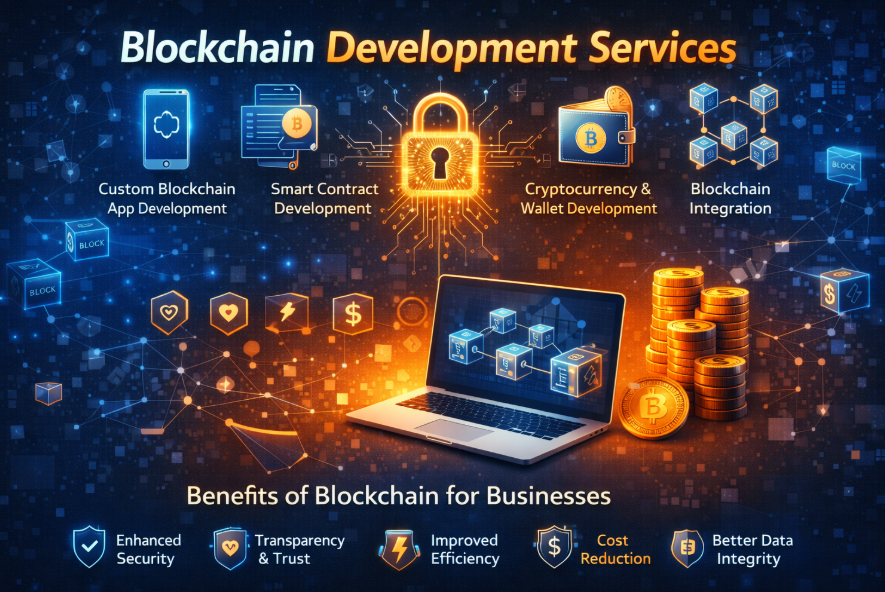
In today’s fast-evolving digital economy, blockchain development solutions are transforming how businesses manage data, transactions, and trust. From finance to healthcare, companies are adopting decentralized technologies to improve transparency, security, and efficiency. As industries shift toward digital transformation, blockchain-based application solutions are becoming essential for building reliable and future-ready systems.
What Are Blockchain Development Solutions?
Blockchain development solutions refer to the design, development, and deployment of decentralized applications (dApps) and blockchain-based platforms that use distributed ledger technology (DLT). Unlike traditional centralized systems, blockchain networks store data across multiple nodes, ensuring transparency, immutability, and enhanced security.
These solutions typically include:
-
Smart contract development
-
Decentralized application (dApp) development
-
Cryptocurrency wallet development
-
Blockchain consulting and architecture design
-
Tokenization platforms
-
NFT marketplace development
-
Private and public blockchain integration
By leveraging blockchain, businesses can create secure digital ecosystems where transactions are verified automatically without intermediaries.
Key Features of Blockchain-Based Application Solutions
Modern application solutions built on blockchain offer several benefits:
-
Decentralization – No single authority controls the network.
-
Transparency – All transactions are recorded and visible on a shared ledger.
-
Security – Cryptographic encryption protects data from tampering.
-
Immutability – Once recorded, data cannot be altered.
-
Automation – Smart contracts execute transactions automatically when predefined conditions are met.
These features make blockchain highly suitable for industries requiring high trust and data integrity.
Popular Tools Used in Blockchain Development
To build robust blockchain development solutions, developers use specialized tools and platforms. Some of the most widely adopted tools include:
1. Ethereum
Ethereum is one of the most popular blockchain platforms for developing decentralized applications and smart contracts. It supports programmable contracts written in Solidity and is widely used for DeFi, NFTs, and enterprise blockchain solutions.
2. Hyperledger
Hyperledger is an open-source collaborative project hosted by the Linux Foundation. It is ideal for enterprise-grade blockchain application solutions, especially in supply chain, banking, and healthcare sectors.
3. Solana
Solana is known for its high-speed transactions and low fees. It is commonly used for scalable decentralized applications and crypto-based platforms.
4. Truffle Suite
Truffle is a development framework that simplifies smart contract testing, deployment, and management on Ethereum networks.
5. Ganache
Ganache is used for testing Ethereum smart contracts in a simulated blockchain environment.
These tools help developers build secure, scalable, and efficient blockchain application solutions for businesses of all sizes.
Real-World Examples of Blockchain Development Solutions
Blockchain technology is no longer theoretical—it is actively being used across industries.
1. Financial Services and DeFi
Decentralized finance (DeFi) platforms use blockchain to enable peer-to-peer lending, borrowing, and trading without banks. Smart contracts automate transactions, reducing operational costs and improving speed.
Cryptocurrencies like Bitcoin and Ethereum operate on blockchain networks, providing decentralized digital currency solutions.
2. Supply Chain Management
Blockchain enhances transparency in supply chains by tracking goods from origin to destination. Each transaction is recorded on the ledger, ensuring authenticity and preventing fraud.
For example, global retailers use blockchain to verify product sourcing and reduce counterfeit goods.
3. Healthcare
In healthcare, blockchain development solutions help secure patient records and ensure data privacy. Hospitals can share medical records securely across institutions without compromising sensitive information.
4. Real Estate
Blockchain simplifies property transactions through smart contracts. Buyers and sellers can complete transactions securely without relying heavily on intermediaries, reducing paperwork and fraud risks.
5. Voting Systems
Blockchain-based voting application solutions increase transparency and reduce election fraud by recording votes immutably on a decentralized ledger.
Why Businesses Need Blockchain Development Solutions
Organizations across industries are investing in blockchain for several reasons:
-
Enhanced data security
-
Reduced operational costs
-
Improved trust and transparency
-
Faster transaction processing
-
Elimination of intermediaries
As digital transformation accelerates, blockchain offers a competitive advantage by enabling secure and automated systems.
Future of Blockchain Application Solutions
The future of blockchain development solutions looks promising. With advancements in Web3, decentralized finance, and tokenization, blockchain will continue to disrupt traditional business models. Emerging trends such as Central Bank Digital Currencies (CBDCs), enterprise blockchain adoption, and AI integration with blockchain are expected to drive further innovation.
Companies that adopt blockchain early can benefit from improved efficiency, enhanced security, and greater customer trust.
Conclusion
Blockchain development solutions are revolutionizing the digital landscape by offering decentralized, transparent, and secure systems. From financial services to healthcare and supply chain management, blockchain-based application solutions are delivering real-world impact.
With powerful tools like Ethereum, Hyperledger, Solana, Truffle, and Ganache, businesses can build scalable and future-ready decentralized platforms. As adoption continues to grow, blockchain technology will play a vital role in shaping the next generation of digital innovation.
Organizations looking to stay ahead in the competitive market should explore blockchain development solutions to unlock new growth opportunities and operational excellence.


